
Law Firm of Farhan Aryan P.C.
IMMIGRATION LAW | CONSUMER ALERT | SEPTEMBER 2026
Before You Pay Anyone to "Fix" Your Papers,
Read This
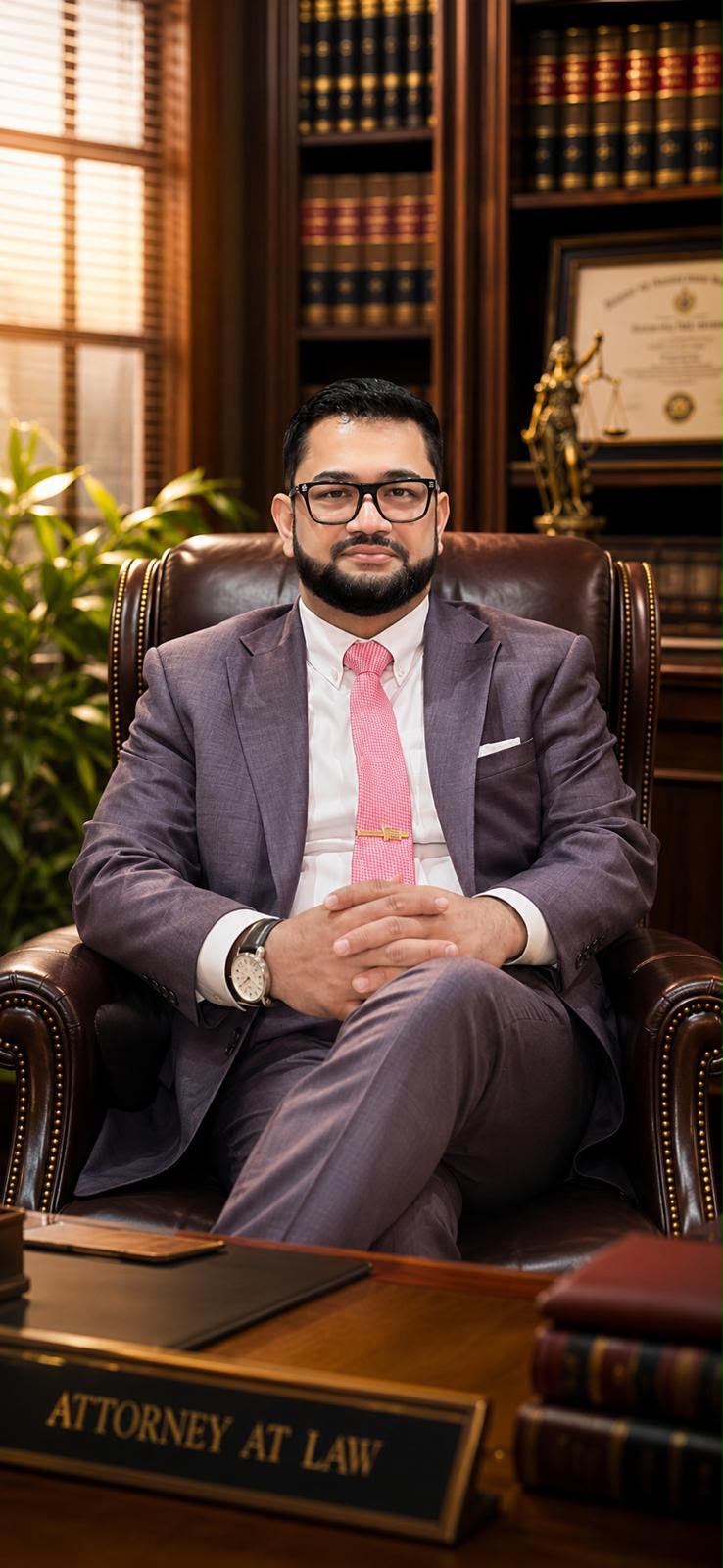
By Farhan Aryan, Esq.
A man came to see me this summer with a folder of forms someone else had filed for him. He had
paid a storefront office in Queens a few thousand dollars in cash. The person who took his money
called himself an "immigration consultant," promised a work permit in three months, and filled out an
asylum application the man had never read. The story in that application was not his story. By the
time he reached my office, he had an interview notice, and the only honest advice I could give him
was about damage control.
I share this because I see some version of it every month, and this year the stakes are higher than ever.
The rules are changing too fast for guesswork
Immigration law has always been technical. In 2026 it is also a moving target. For green card applica‐
tions filed on or after September 18, USCIS now looks at a wider set of public benefits under the new
public charge policy, while applications filed before that date are judged under the older 2022 rules. A
single day on a filing receipt can change which standard applies to your family.
USCIS has also become stricter with paperwork. Its August 5, 2026 policy alert on evidence, Re‐
quests for Evidence and Notices of Intent to Deny took effect immediately, and attorneys have already
seen the effect in real cases. At the same time, the agency is on track to decide fewer applications this
year than in any year in more than a decade, with a backlog of 12.1 million pending cases. A weak fil‐
ing does not just get delayed. It can sit for a year and then come back with questions you should have
answered the first time.
Enforcement has changed too. ICE has detained immigrants at airports, including people with
pending applications or valid work permits, and in one widely reported case ICE arrested a Navy ser‐
vice member's mother at her own green card interview. Walking into an interview without knowing
what is in your file is a real risk now.
What a "notario" can and cannot legally do
Many of our neighbors come from countries where a notario público is a trained lawyer. The New
York Attorney General's office points out that in the United States, a notario is not an attorney. Here, a
notary public stamps signatures. That is all.
1
Law Firm of Farhan Aryan P.C.
New York law is clear on this. Under General Business Law § 460-d, an immigrant assistance service
provider may not give legal advice or practice law. The same section bars them from calling them‐
selves "notario," "immigration consultant," or "immigration specialist," or using any title that makes a
customer believe they are authorized to advise on immigration matters. They also may not tell you
how to answer questions on a government form about your immigration status. Every contract they
sign with you must state, in writing, that the person helping you is not an attorney and may not give
legal advice. That rule comes from General Business Law § 460-b.
When these providers cross the line and take your money through false promises, it is a crime. Under
New York Penal Law § 190.89, immigrant assistance services fraud involving more than $1,000 is a
class E felony. More broadly, Judiciary Law § 478 makes it unlawful for anyone not admitted to the
New York bar to practice as an attorney or hold themselves out as one.
Federal rules draw the same line. Under 8 C.F.R. § 292.1 and § 1292.1, the people who may represent
you before USCIS and the immigration courts are licensed attorneys, accredited representatives of or‐
ganizations recognized by the Justice Department, and a few narrow categories such as supervised
law students. A paid storefront preparer is not on that list.
The problem is getting worse, not better
Complaints about immigration service providers were among the most common consumer complaints
the New York Attorney General's office received last year. City inspectors issued 175 violations to im‐
migrant service providers in just the first four months of 2026, compared with 220 for all of 2025.
The scams are also getting more sophisticated. The New York Department of State warned in June
that victims reported video calls on Zoom or WhatsApp with a fake "USCIS officer" in uniform. No
real USCIS officer will ask you to pay over WhatsApp.
Why one wrong form can follow you for life
This is the part people underestimate. A bad preparer does not just waste your money. The mistakes
land on you, not on them.
Under INA § 212(a)(6)(C)(i), a person who seeks a visa or any immigration benefit through fraud or
willful misrepresentation of a material fact becomes inadmissible. A waiver exists, but only for cer‐
tain people with qualifying relatives, and it is discretionary. If someone invents facts on your applica‐
tion and you sign it, the government can hold you responsible.
Asylum carries its own trap. Under INA § 208(d)(6), a person who knowingly files a frivolous asylum
application, after being warned, becomes permanently ineligible for any benefit under the immigra‐
tion laws. That can close the door on a green card through a U.S. citizen spouse years later. Asylum
also has a one-year filing deadline from the date of arrival under INA § 208(a)(2)(B), with narrow ex‐
ceptions. Congress has now added a filing fee and an annual fee for each year an asylum application
2
Law Firm of Farhan Aryan P.C.
stays pending. Missing a deadline or a payment because a preparer did not know the rules is a mistake
you may not be able to undo.
What a licensed attorney actually does for you
A lawyer does more than fill in boxes. Before anything is filed, I look at the whole history: every
entry and exit, every arrest even if the case was dismissed, every prior application, every name you
have used. Most denials I see did not come from the form someone was trying to file. They came
from something in the person's past that nobody checked.
A licensed attorney also answers to someone. We are bound by rules of professional conduct, we can
be disciplined by the courts, and we owe you confidentiality. If an attorney files your case, the attor‐
ney's name and license are on it. A storefront preparer usually leaves no name on the form at all.
How to protect yourself
Ask to see a bar admission. You can confirm any New York lawyer's license through the New York
State Unified Court System's attorney search. If you are working with a nonprofit, ask whether the
person helping you is a Justice Department accredited representative, and check the recognized or‐
ganization roster. Never sign a form you have not read or had read to you in your language. Always
keep a copy of everything filed in your name. The law in New York already requires providers to re‐
turn your original documents on request, even if there is a fee dispute.
If you think you have been cheated, report it. The New York Attorney General's immigration fraud
hotline is 1-800-771-7755, and the state Office for New Americans hotline is 1-800-566-7636.
Hiring a lawyer costs money, and I understand that many families are stretched. But I have spent far
more hours fixing cases that someone else damaged than I would have spent doing them right from
the start. Getting it right once is almost always cheaper than trying to repair it later.
Farhan Aryan, Esq. is an Attorney and Counsellor-at-Law admitted in the State of New York and the U.S. District
Courts for the Eastern and Northern Districts of New York. He practices immigration, personal injury, and real
estate law at the Law Firm of Farhan Aryan P.C., 72-35 Broadway, Suite 213, Jackson Heights, NY 11372. He can be
reached at +1 (844) 343-2529 ext. 101 or farhan@aryanlawfirm.com. Website: www.aryanlawfirm.com. This article
is general information and not legal advice for any individual case.
3