
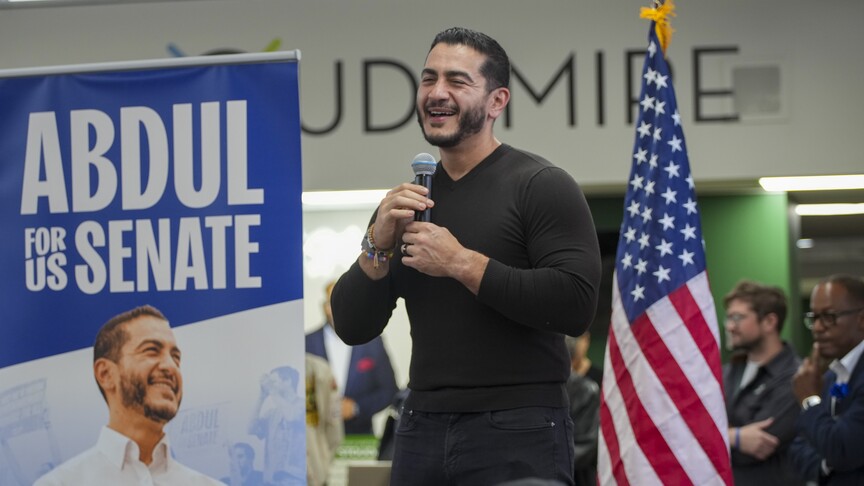
WASHINGTON, D.C. – Abdul El-Sayed has made history by becoming the first Muslim ever elected to the United States Senate in its 237-year history, marking a significant milestone in American political representation.
El-Sayed, a 42-year-old Democrat from Michigan, defeated Republican candidate and former Congressman Mike Rogers in the November 3, 2026, Senate election. His victory makes him the first Muslim American elected to the upper chamber of the U.S. Congress since the Senate was established in 1789.
Born in Michigan to Egyptian immigrant parents, Abdulrahman Mohamed El-Sayed is a physician, epidemiologist and public health expert. He previously served as director of the Wayne County Department of Health, Human and Veterans Services and also led Detroit’s public health department.
During his campaign, El-Sayed focused on issues including rising living costs, affordable healthcare, economic inequality and reducing corporate influence in American politics. His policy agenda also included Medicare for All, a proposal aimed at expanding access to healthcare.
His campaign attracted national attention, particularly because of his religious identity and policy positions. Despite facing controversial rhetoric and attacks related to his Muslim faith, El-Sayed secured victory in Michigan.
Reacting to his historic achievement, El-Sayed emphasized that his election represents more than an individual political victory. He described it as an important moment for Americans who have often felt underrepresented in the country’s political institutions.
“I didn’t run to be the first Muslim senator. I ran to be the next senator from the state of Michigan who happens to be Muslim,” he said.
His election is being widely viewed as a landmark moment for Muslim Americans and immigrant communities across the United States.
El-Sayed is expected to take office on January 3, 2027, when the new Senate term begins. His victory adds a new chapter to the history of religious and cultural diversity in American politics.
The Bangla Hour
Reporting Beyond Borders