
The United States has long played an influential role internationally in promoting human rights, democracy and individual freedoms. However, its domestic human rights record has also been the subject of debate for many years. Human rights organizations have criticized U.S. government policies and practices on a range of issues, including immigration, asylum seekers' rights, police use of force, racial discrimination, the death penalty, prisoners' rights, freedom of expression, reproductive rights and overseas military operations.
Human Rights Watch's World Report 2026 and Amnesty International's reports on the United States have raised detailed concerns about these issues, focusing on developments in 2025.
Immigration and the Rights of Asylum Seekers
Immigration remains one of the most contentious human rights issues in the United States.
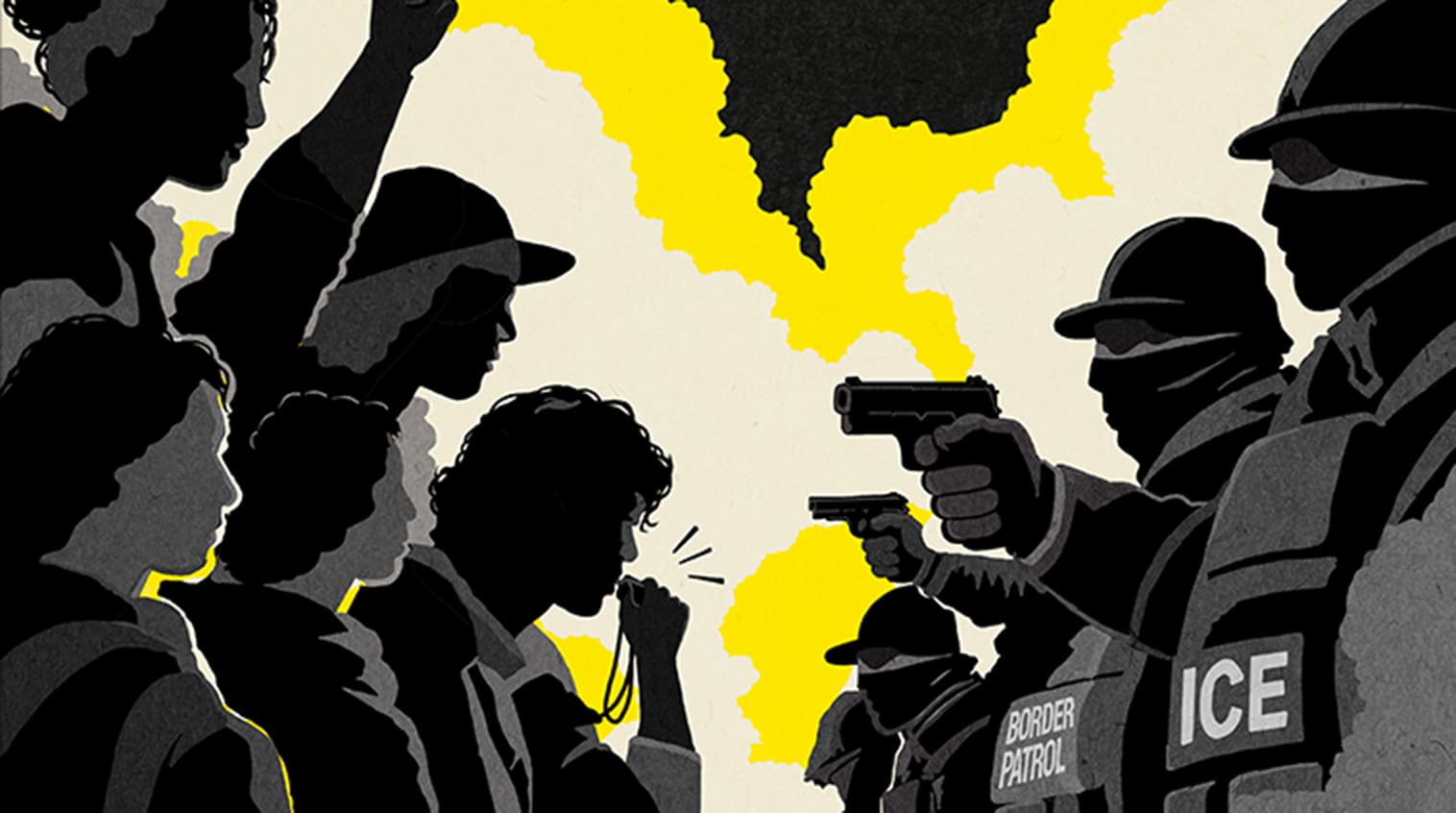
In 2025, the Trump administration intensified border enforcement and immigration operations. According to Human Rights Watch, allegations of excessive force and misconduct emerged during operations conducted by Immigration and Customs Enforcement (ICE) and other law enforcement agencies in various areas. The organization also reported that immigration raids created fear and uncertainty among many immigrants and their families.
According to Amnesty International, access to the United States for asylum seekers was significantly restricted in 2025, while immigration enforcement became more stringent.
The U.S. government's position, however, is that these measures are necessary to secure the country's borders, control illegal immigration and protect national security.
Detention Facilities and the Rights of Detainees
The prolonged detention of immigrants and the treatment of people in custody have also raised serious questions.
Human Rights Watch estimates that approximately two million people are held in prisons, jails and immigration detention facilities across the United States on any given day. A significant proportion are detained before their cases have been resolved.
Amnesty International has also highlighted the continued international debate over detainees at the Guantanamo Bay detention facility in 2025. According to the organization, some individuals held there have not been formally charged with any offense.
The U.S. government argues that Guantanamo Bay serves an important national security purpose by holding individuals associated with terrorism and security threats. However, prolonged detention and the right to a fair trial have remained subjects of international concern for years.
Police Use of Force and Its Impact on Black Americans
Police violence is another major issue in the U.S. human rights debate.
According to Human Rights Watch, 1,301 people were killed by police gunfire and other forms of police use of force in the United States in 2025. The same report noted that Black and Latino people remain disproportionately represented in the country's incarceration system relative to their share of the population.
Amnesty International cited data from independent sources indicating that 1,143 people were killed by police gunfire in 2025. Its report also highlighted the disproportionate impact of fatal police violence on Black communities.
The figures reported by the two organizations differ because they use different data sources, collection methods and definitions.
Racial Discrimination and Civil Rights
The United States has a long history of slavery and racial discrimination. Even today, allegations of race-based disparities in education, employment, the justice system, housing and law enforcement continue to appear in research and human rights reports.
Human Rights Watch reported that in 2025 the Trump administration moved to eliminate federal Diversity, Equity and Inclusion (DEI) programs, weakening some government initiatives intended to address the lasting effects of historical racial discrimination.
Supporters of the administration's approach argue that the objective is to prioritize individual merit and equal treatment under the law in government hiring and policymaking.
The debate reflects a broader disagreement over how the United States should address historical injustice while ensuring equal rights and opportunities for all citizens.
Freedom of Expression
The First Amendment to the U.S. Constitution provides strong legal protections for freedom of speech and the press. Nevertheless, controversy has grown in recent years over the treatment of journalists, universities, protesters and political critics by government authorities.
Human Rights Watch's 2026 report stated that allegations of government pressure on universities, law firms, civil society organizations and critics of the administration emerged in 2025.
Particular controversy surrounded pro-Palestinian protests and the relationship between immigration enforcement, government surveillance and freedom of expression.
The U.S. administration, meanwhile, has emphasized the need to protect national security, maintain safety on university campuses and enforce public order.
The Right to Protest and Assemble
The right to peaceful protest and assembly is a fundamental component of a democratic society.
In 2025, demonstrations against immigration policies and other government decisions took place in cities across the United States. According to Human Rights Watch, allegations of excessive force by law enforcement emerged during efforts to control protests in areas including Los Angeles and Chicago.
The central question is how the state can maintain public safety while protecting the constitutional rights of people engaged in peaceful demonstrations.
The Death Penalty
The United States is among the few developed countries where capital punishment remains legal in various jurisdictions.
According to Human Rights Watch, 47 people were executed in different U.S. states in 2025.
Amnesty International also reported that executions continued during the year and that several states considered or pursued new laws or initiatives involving different execution methods, including firing squads.
Opponents argue that the death penalty can result in irreversible injustice when a person is wrongfully convicted. Supporters, however, maintain that it is an appropriate legal punishment for the most serious crimes.
The debate over capital punishment continues to raise questions about justice, deterrence, wrongful convictions and the role of the state in taking human life.
Gun Violence
The widespread ownership of firearms and the prevalence of gun violence remain major public safety and human rights concerns in the United States.
Citing U.S. government data, Amnesty International reported that 46,728 people died from gun-related violence in 2023. Hundreds of mass shootings were also documented in the United States in 2025.
The country has long debated how to balance the constitutional right to bear arms with the government's responsibility to protect public safety.
The issue remains deeply divisive, with disagreements over gun ownership, background checks, restrictions on certain weapons and measures to prevent shootings.
Women's Reproductive Rights
Abortion rights remain a major political and human rights issue in the United States.
According to Amnesty International, strict abortion restrictions remained in effect in various states in 2025. The organization argues that these restrictions can disproportionately affect low-income and marginalized communities by limiting access to reproductive health care.
States and groups supporting abortion restrictions, on the other hand, emphasize the protection of fetal life.
The disagreement reflects broader national divisions over bodily autonomy, reproductive health, religious beliefs and the legal status of abortion.
LGBTQI+ Rights
Policy changes and political disputes over the rights of LGBTQI+ people, particularly transgender individuals, have also attracted considerable attention.
Human Rights Watch reported that federal measures were introduced in 2025 that reduced certain protections for transgender and intersex people.
Supporters of these changes describe them as efforts to revise administrative and social policies. Human rights organizations, however, warn that such measures may increase the risk of discrimination and undermine equal treatment.
The issue remains a significant point of contention in debates over civil rights and individual freedom.
Indigenous Peoples' Rights
The rights of Native American and Alaska Native communities are also an important part of the U.S. human rights debate.
Human Rights Watch has raised concerns about Indigenous peoples' land rights, environmental protection, mineral extraction and the right of local communities to participate in decisions affecting their lives.
Controversy is particularly evident in mining and infrastructure projects, where questions persist about whether the views and consent of affected Indigenous communities are adequately respected.
These issues involve not only economic development but also cultural preservation, environmental protection and the recognition of Indigenous rights.
Violence Against Women
According to Amnesty International, American Indian and Alaska Native women face a disproportionately high risk of sexual violence compared with other population groups.
The organization has also highlighted barriers that survivors encounter when seeking justice and medical services.
The issue illustrates the interconnected effects of race, gender, poverty and inequalities within the justice system. It has prompted calls for improved victim support, stronger accountability and better access to health care and legal assistance.
U.S. Military Operations Abroad
The human rights debate surrounding the United States extends beyond its borders.
Amnesty International highlighted civilian casualties resulting from U.S. military operations in Yemen and other countries in 2025. The organization called for investigations into the legal basis of certain attacks and the adequacy of measures to protect civilians.
Human rights organizations have also criticized U.S. arms transfers to Israel. Amnesty International has expressed concern that such weapons could contribute to attacks harming civilians.
These are assessments and allegations made by human rights organizations. The U.S. government and other parties involved have cited national security considerations and counterterrorism objectives in defending military operations.
The debate raises broader questions about international humanitarian law, civilian protection, accountability and the responsibilities of states engaged in armed conflict.
The United States' Role in the International Human Rights System
The United States has played a significant role in international efforts to promote human rights. At the same time, controversy has increased over its participation in international institutions and multilateral initiatives.
Human Rights Watch's 2026 report stated that the Trump administration took steps to withdraw the United States from the United Nations Human Rights Council and the World Health Organization, while reducing aspects of U.S. engagement in international human rights initiatives and humanitarian assistance.
According to the organization, these developments could have implications for global human rights protection.
The debate also concerns the extent to which the United States can influence international human rights standards while facing criticism over its own domestic policies.
The Dual Reality of Human Rights in the United States
Two important aspects must be considered when assessing the U.S. human rights situation.
On the one hand, the Constitution, the courts, an independent press, civil society and state-level legal systems provide a substantial institutional framework for protecting individual liberties.
On the other hand, serious concerns and allegations persist regarding immigration enforcement, police use of force, racial discrimination, gun violence, capital punishment, reproductive rights and the prison system. Reports by Human Rights Watch and Amnesty International suggest that recent administrative policies have intensified several of these debates.
A balanced assessment must distinguish between constitutional protections, the implementation of government policies and the experiences of people affected by those policies.
Why the Issue Matters to Bangladesh
Relations between Bangladesh and the United States extend beyond trade and diplomacy. Human rights, democracy, labor rights, immigration and civil liberties are also important issues in bilateral discussions.
The United States regularly comments on the human rights situation in Bangladesh. At the same time, some members of Bangladeshi civil society and human rights organizations have called for greater international attention to the domestic human rights challenges facing the United States itself.
This makes it important for human rights discussions between Bangladesh and the United States to be reciprocal and based on consistent standards. Assessments of one country's record should also consider the human rights challenges within the other.
Such an approach does not diminish the importance of addressing abuses in either country. Rather, it reinforces the principle that human rights standards should apply equally to all states.
Conclusion
The United States is one of the world's most powerful democracies and an important participant in the international human rights system. At the same time, serious and ongoing debates over human rights continue within the country.
Questions surrounding the rights of immigrants and asylum seekers, Black and other minority communities, prisoners, people facing the death penalty, women, LGBTQI+ individuals, Indigenous peoples and protesters remain central to discussions about American democracy and civil liberties.
Reports by Human Rights Watch and Amnesty International examining developments in 2025 have brought renewed international attention to these challenges. However, their findings represent independent human rights assessments and should be distinguished from the official position of the U.S. government.
Ultimately, the fundamental question is whether a state can ensure that every individual enjoys dignity, freedom, access to justice and equal protection under the law while addressing national security concerns and exercising government authority.